
- Olive pomace solvent extraction plant: process & equipment
- Small-scale coconut oil refining: Is batch refining unit feasible for 3 TPD project
- Cold pressing vs hot pressing oil expeller: Yield & quality differences explained
- 5 TPD cottonseed oil pressing line: Complete setup from cleaning to filtering for startups
- Screw press vs hydraulic oil press: Key differences & selection guide for edible oil production
- Mobile/WhatsApp:
+86 13526627860
- Phone:
+86 13526627860
- Email:
market@gloryoiltech.com
- Glory Oiltech Wins Order for Idesia Polycarpa Fruit Oil Pressing and Refining Line for a North Korea Project
- Glory Oiltech wins 50TPD full-continuous palm oil refining plant order from Mexican client
- The 19th Nigeria (Lagos) China Commodities Expo 2026: Glory Oiltech Presents Complete Palm Oil Processing Solutions at Booth 1B09
- Glory Oiltech to showcase 1 TPH integrated palm oil processing line at PALMEX Malaysia 2026
- Glory Oiltech wins order for 1TPH double screw palm oil press machines for Congo palm project
Olive pomace solvent extraction plant: process & equipment
Olive pomace left after mechanical or centrifugal olive oil extraction still carries recoverable oil. Sending it to waste leaves that oil unclaimed, but treating pomace like a standard oilseed is a mistake: it arrives wet, relatively low in oil and inconsistent from one delivery to the next. Those three traits decide whether an extraction line reaches its design throughput or quietly underperforms — and they have to be resolved before equipment is ordered, not after.
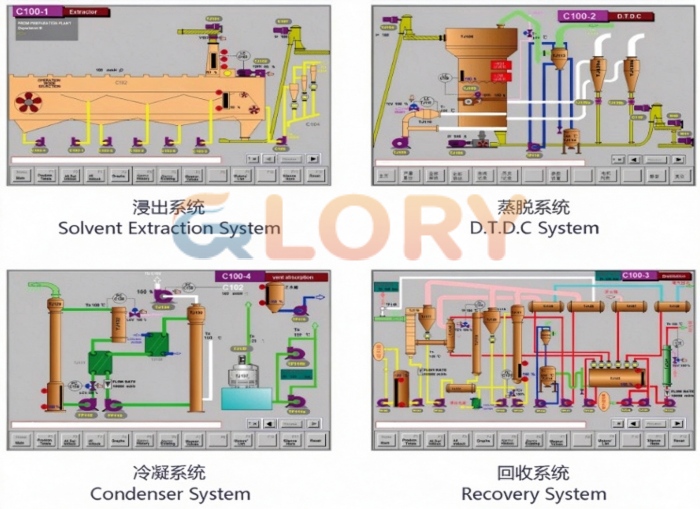
Yes — olive pomace can be solvent-extracted, and Glory Oiltech (Henan Glory) builds complete plants for it. A working line combines raw-material preparation and drying, solvent extraction, miscella evaporation and stripping, DTDC meal desolventizing, and closed-loop solvent recovery. Below is the process, the equipment behind each stage, and how we configure it.
 Olive pomace solvent extraction process
Can Olive Pomace Be Processed by Solvent Extraction?
Yes. Once the olive oil mill has removed the oil mechanically, an appropriate solvent — commonly n-hexane — dissolves the residual oil in the prepared pomace, allowing it to be separated from the solid material. The part that needs judgement is not whether extraction works, but how much preparation the pomace needs before it reaches the extractor. We build these lines, and we begin every one of them with that question.
Olive pomace, also known as olive cake, is the solid by-product left after olive oil extraction. It contains pulp, skin, kernel and stone together with varying amounts of water and residual oil, and its composition depends on the extraction method used at the mill. The International Olive Council gives the indicative ranges below.
| Olive Pomace Type | Residual Oil Content | Moisture Content |
|---|---|---|
| Pressed olive pomace | 3–9% | 25–35% |
| Three-phase centrifugation pomace | 2.5–6% | 45–55% |
| Two-phase centrifugation pomace | 2–3.5% | 60–70% |
Source: International Olive Council, Quality Management Guide for the Olive-Pomace Oil Extraction Industry. Values are indicative ranges for pomace as received.
Pressed pomace at 25–35% moisture and two-phase pomace at 60–70% present two different drying problems, and the dryer is usually where a pomace line succeeds or fails. Residual oil content sets how much oil there is to recover in the first place. That is why the first thing we ask for is a sample of your pomace, not a target capacity — once we know the inlet moisture and residual oil, we can tell you what the line will produce and how much drying it needs, rather than quote a standard configuration and hope it fits.
Why Olive Pomace Moisture Content Matters
Moisture is one of the main factors affecting solvent extraction. Excessive moisture interferes with solvent penetration and oil transfer, increases the drying load and changes the physical condition of the material entering the extractor. Drying is therefore essential preparation: it brings moisture down to a level the solvent can work with, limits fermentation and deterioration in storage, improves the physical condition of the pomace for solvent contact, and supports stable extraction performance.
The International Olive Council's quality management guide recommends reducing olive pomace moisture to roughly 10%, with the pomace temperature at the end of drying kept below 70–80°C. A 2024 study published in Sustainability likewise found that storage and drying conditions affect the oil content and acidity of two-phase olive pomace, which is why we treat raw-material handling as part of the process rather than a warehouse detail.
How Does an Olive Pomace Solvent Extraction Plant Work?
An olive pomace line runs continuously from wet pomace to crude oil and dry exhausted pomace. The main processing flow is:
Olive Pomace → Raw Material Preparation → Drying → Extraction → Two Product Streams
Oil stream: Miscella → Evaporation → Stripping → Crude Olive Pomace Oil
Solid stream: Wet Extracted Pomace → DTDC Desolventizing → Drying & Cooling → Exhausted Olive Pomace
Solvent circulation: Solvent Vapor → Condensation → Water Separation → Solvent Recovery → Reuse
We have merged process and equipment into one walkthrough on purpose. The two cannot be specified separately: the dryer decides what the extractor can do, and the extractor decides what the recovery system must handle.
Raw Material Preparation and Drying
Fresh pomace is received, inspected and prepared. Depending on its physical condition, the preparation section may include screening, cleaning or stone separation — we include stone removal when the stone fraction and particle size justify it, and leave it out when they do not. The prepared pomace then enters a rotary drum dryer, where the rotating drum turns the material while hot air passes through it, evaporating moisture as the pomace moves toward the discharge end. We control this stage carefully: too much moisture blunts solvent extraction, too much heat damages the residual oil. After drying, the material is cooled and conditioned before extraction.
Solvent Extraction
 Olive pomace extractor machine
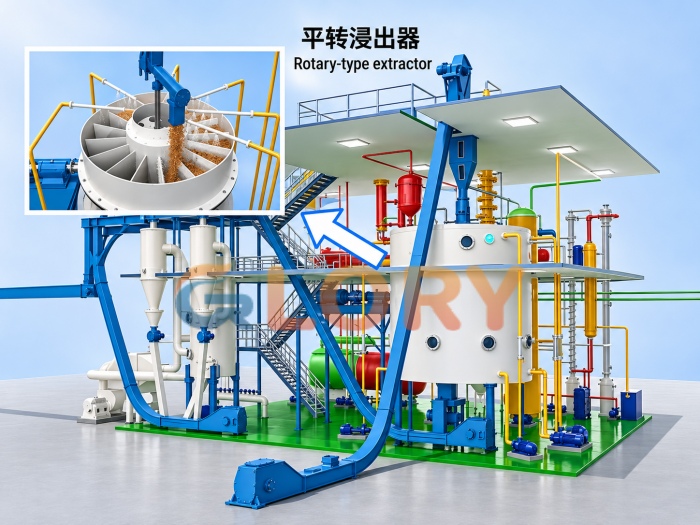
Dried pomace enters an extractor, where it meets the extraction solvent. The machine is divided into multiple rotating extraction cells; as the material moves through them it passes through successive spraying, soaking and draining stages. Fresh solvent and miscella are introduced through a staged spraying system, and as the solvent penetrates the pomace it dissolves the residual oil into miscella. The section produces two streams: miscella, which goes to evaporation and stripping, and wet extracted pomace containing residual solvent, which is conveyed to the DTDC. We size the extractor against material permeability and feed consistency, both of which depend on how well the pomace was prepared one stage earlier.
Miscella Evaporation and Stripping
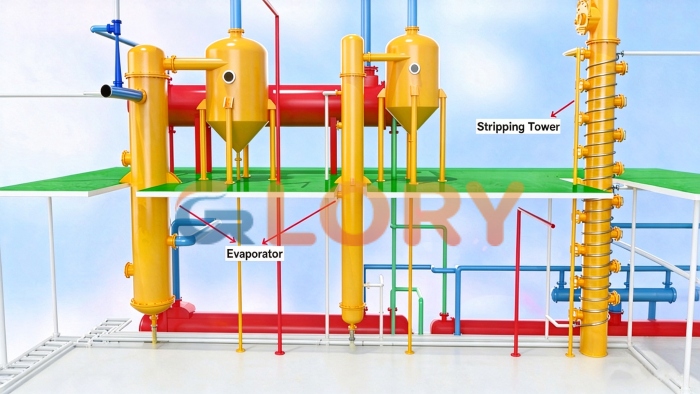
The miscella leaving the extractor is oil dissolved in solvent, and the two must be separated. Our standard arrangement is a foam feeder, two long-tube evaporators heated by indirect steam, and a stripping column using direct steam. The foam feeder stabilizes feeding and reduces carryover; indirect steam vaporizes most of the solvent while the oil concentrates; direct steam in the stripping column removes the remainder. The crude olive pomace oil is cooled to a storage tank and the vapour goes to recovery. We use two evaporation stages rather than one because it strips solvent more gently and protects the oil.
 Miscella evaporation stripping tower
Wet Pomace Desolventizing with DTDC
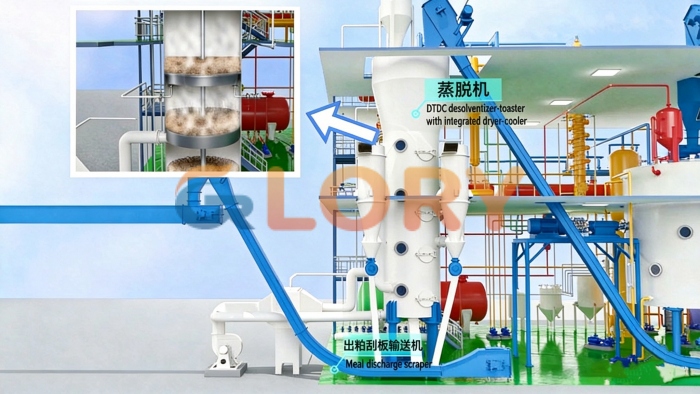
Pomace leaving the extractor still contains solvent and cannot be stored or shipped in that state. It enters a DTDC (Desolventizer-Toaster-Dryer-Cooler), a single integrated unit that pre-desolventizes, applies controlled heating and direct steam to remove residual solvent, dries the material, and cools it before discharge. Getting this stage right is what lets you sell or use the exhausted pomace instead of paying to dispose of it — and what keeps residual solvent within a saleable specification.
 DTDC (Desolventizer-Toaster-Dryer-Cooler)
Solvent Recovery and Recycling
Solvent vapour from evaporation, stripping and desolventizing is collected and sent to the solvent recovery system: condensers cooled by water turn the vapour into liquid, a solvent-water separator splits the phases, and a tail-gas step recovers solvent carried in the remaining gas before the recovered solvent returns to circulation. We build this as a closed loop with the extraction area held under slight negative pressure and electrical equipment rated for solvent service. A solvent plant that leaks is both expensive and unsafe, and neither is acceptable to us.
 Solvent condensation recovery system
Reference engineering indicators for the solvent extraction systems
| Indicator | Reference value |
|---|---|
| Residual oil in extracted meal | Below 1% |
| Solvent consumption | Below 4 kg per tonne of feed |
| Steam consumption | Below 280 kg per tonne of feed |
| Electricity consumption | Below 12 kWh per tonne of feed |
| Water consumption | Below 25 kg per tonne of feed |
| Finished meal moisture | 10.5–13%, adjustable |
| Residual solvent in finished meal | Below 500 ppm |
| Residual solvent in crude oil | Below 300 ppm |
These are engineering reference indicators from our solvent extraction technology. Actual results depend on feedstock characteristics, equipment configuration and commissioning conditions; final product specifications must also meet the requirements of the destination market.
What Should Be Considered When Designing an Olive Pomace Solvent Extraction Plant?
A suitable solution involves more than selecting an extractor. The drying, extraction, desolventizing, oil separation and solvent recovery sections must be properly matched to the raw material and to your processing requirements.
Olive Pomace Characteristics and Raw Material Analysis
The first step is to understand the incoming pomace. The information we work from includes:
Olive oil extraction method: traditional pressing, two-phase or three-phase centrifugation.
Moisture content: sets the drying requirement and the condition of material entering the extractor.
Residual oil content: determines how much oil is recoverable from the feedstock.
Pulp-to-stone ratio: decides whether stone separation or additional conditioning is needed.
Particle size and physical condition: affect feeding, distribution and solvent penetration.
Storage time and freshness: indicate the condition of the pomace and its suitability for processing.
Raw material sampling and laboratory analysis provide the basis for equipment selection and process design. We do not configure a line from a specification sheet alone — if we have not seen your pomace, we will tell you what we need to know before we quote.
Processing Capacity
Our standard olive pomace solvent extraction line is designed for feed capacities of 20 tonnes per day and above — and we agree with you up front whether that figure means wet pomace received at the plant or dried material entering the extractor, because the two are very different numbers. Below that level, solvent recovery does not pay for itself. If you also plan to produce refined olive pomace oil, we can add refining as a downstream section.
Solvent Safety and Environmental Requirements
n-hexane is flammable, so plant layout and safety systems are designed in from the start: separating the solvent extraction area from drying facilities and ignition sources, using explosion-protected electrical equipment and instrumentation, providing ventilation and vapour monitoring, designing reliable solvent storage and recovery, maintaining pressure control to limit vapour leakage, and providing fire protection and emergency response. Emissions and wastewater are managed to local environmental requirements. The International Olive Council's quality management guide makes the same points on separating drying from extraction, ventilation and fire prevention where hexane is used. We treat these as design requirements, not optional extras.
Related Oil Processing Project Experience
We delivered a 20 tpd crude olive oil refining plant in Peru in 2019. Different feedstocks, the same engineering discipline: size the front end to the material, run the solvent loop safely, and hand over a line that reaches its design throughput. That is the experience we bring to an olive pomace project — Glory Oiltech backs it with project-specific layout and installation drawings, operator training and spare-parts support, plus a local branch and warehouse in Nigeria for African projects.
FAQ
Can this line be added to our existing olive oil mill?
In most cases yes. We supply the extraction section as a separate, explosion-protected unit that sits behind an existing milling operation. What we need to check first is your available plot, steam and power supply, and the moisture of the pomace you currently produce. We will give you a firm answer after a site review rather than promise a fit we have not seen.
What can the exhausted pomace be used for after extraction?
It leaves the DTDC dried, cooled and low in residual solvent. Its practical outlets depend on composition and local rules — biomass fuel is the common route, and other uses are assessed case by case. We will look at your pomace and tell you which options are realistic rather than promise a market that may not exist for your material.
Can you guarantee the residual oil figure?
The figures we publish are engineering reference targets, not promises printed on a quotation. What we commit to is sizing the line from your analysed feedstock and verifying performance at commissioning against those targets. If your contract needs a guaranteed figure, we will set it against the sample we analysed and the operating conditions we agree — not a number taken out of context.
Request a Customized Olive Pomace Solvent Extraction Solution
Olive pomace solvent extraction is a recovery decision as much as an equipment purchase — the line only pays if the preparation, drying, extraction and solvent sections are sized to the pomace you actually have. Glory Oiltech supplies complete olive pomace solvent extraction plants, from the rotary dryer and extractor through evaporation, DTDC and solvent recovery, configured around your feedstock and capacity basis.
To help us understand your project, please share:
Your olive pomace source and extraction method.
The moisture and residual oil content, if available.
Your expected daily raw material processing capacity.
Your desired crude oil and exhausted pomace specifications.
Contact Glory Oiltech today to discuss your olive pomace solvent extraction project and obtain a customized processing solution.
 PREV:Nothing
 NEXT:Small-scale coconut oil refining: Is batch refining unit feasible for 3 TPD project
Leave a message
If you wanna to get more details about Olive pomace solvent extraction plant: process & equipment, you can send E-mail to market@gloryoiltech.com. Or you can consult our professional engineers and specialized sales team by leaving a message in below form. We will contact you ASAP. You also can visit our factory in Henan, China.
- QWhat is your raw material?
- QHow many tons do you want to process per day?
- QWhat machine do you want? or other requirement?

