
- Cold pressing vs hot pressing oil expeller: Yield & quality differences explained
- 5 TPD cottonseed oil pressing line: Complete setup from cleaning to filtering for startups
- Screw press vs hydraulic oil press: Key differences & selection guide for edible oil production
- 100TPD soybean oil processing plant: expanding pressing vs expanding extraction
- What refining equipment for a small rural oil mill? Complete buyer's guide
- Mobile/WhatsApp:
+86 13526627860
- Phone:
+86 13526627860
- Email:
sales@doingoilmachine.com
- The 19th Nigeria (Lagos) China Commodities Expo 2026: Glory Oiltech Presents Complete Palm Oil Processing Solutions at Booth 1B09
- Glory Oiltech to showcase 1 TPH integrated palm oil processing line at PALMEX Malaysia 2026
- Glory Oiltech wins order for 1TPH double screw palm oil press machines for Congo palm project
- Glory Oiltech secures 3 TPH palm kernel oil processing plant order in Nigeria
- Glory Oiltech secures 30 TPD soybean oil processing plant order in Nigeria
Cold pressing vs hot pressing oil expeller: Yield & quality differences explained
Cold pressing and hot pressing differ mainly in how oilseeds are prepared before mechanical extraction. Both methods use an oil expeller to separate oil from solid material, but their processing conditions affect oil recovery, press cake residual oil, and the characteristics of the resulting oil.
Hot pressing generally recovers more oil, while cold pressing is better suited to markets that prioritize low-temperature processing and natural oil characteristics. The right choice depends on your oilseed, target product, production scale, and required oil recovery.
For an oil processing business, the key question is not simply which method is better, but which method delivers the best balance of oil yield, product quality, and operating returns.
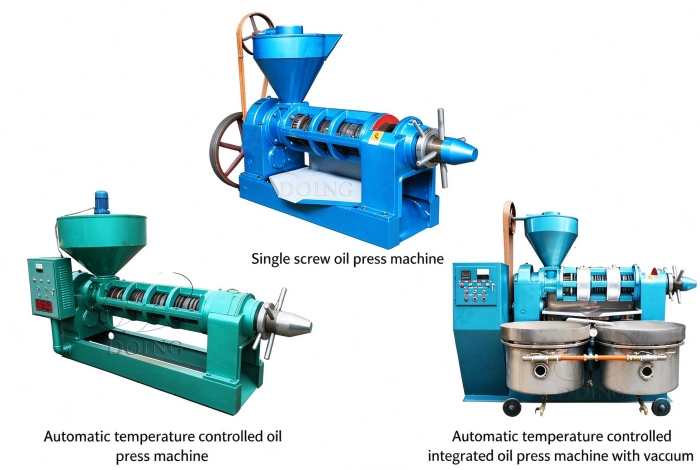 Three types of oil expellers from Glory Oiltech
What Is the Difference Between Cold Pressing and Hot Pressing?
Cold Pressing
Cold pressing extracts oil mechanically without intentional high-temperature conditioning of the seeds before pressing. The seeds are fed into an oil expeller, where a rotating screw generates pressure to separate oil from the solid material.
Although it is called cold pressing, friction inside the expeller can still raise the oil temperature. Actual temperatures depend on the oilseed, machine design, screw speed, and operating conditions.
Cold pressing is particularly suitable for producers targeting specialty oils, natural flavors, or markets that value low-temperature processing.
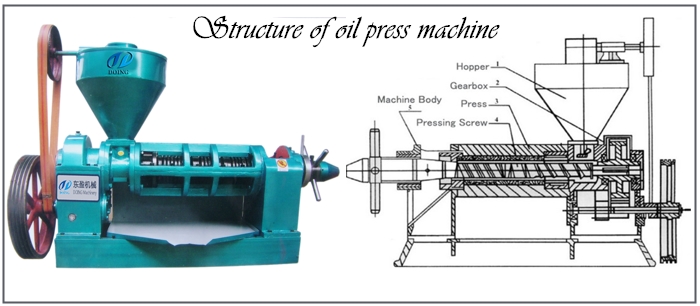 Structure of oil expeller machine
Hot Pressing
Hot pressing typically involves cleaning and preparing the oilseeds, followed by heating or conditioning before they enter the expeller. Heat helps soften the material, reduce oil viscosity, and improve oil release during mechanical pressing.
This preparation generally makes hot pressing more efficient at recovering oil from the same raw material. It is widely used when oil recovery and production efficiency are major priorities.
Cold Pressing vs Hot Pressing: Key Differences
| Comparison | Cold Pressing | Hot Pressing |
|---|---|---|
| Seed preparation | Little or no intentional thermal conditioning before pressing | Seeds are heated or conditioned before pressing |
| Oil recovery | Generally lower | Generally higher |
| Residual oil in press cake | Generally higher | Generally lower |
| Oil characteristics | Suited to low-temperature processing and natural-flavor positioning | Heating may alter oil color, flavor, and heat-sensitive compounds |
| Processing requirements | Fewer heating steps | Requires heating or conditioning equipment |
| Typical business priority | Specialty oils and low-temperature processing | Higher mechanical oil recovery and production efficiency |
These are general process differences, not guaranteed product specifications. Oilseed variety, moisture, pretreatment, expeller design, and operating conditions also affect actual results.
Which Method Produces More Oil?
Hot pressing generally achieves higher mechanical oil recovery than cold pressing when processing the same oilseed under comparable conditions. Heating and conditioning make it easier for oil to separate from the seed material, while cold pressing generally leaves more oil in the press cake.
Published research on rapeseed illustrates the difference. A peer-reviewed review on industrial oilseed extraction (Cravotto et al., 2023, PMC10459726) reports residual oil contents of approximately:
9.9–16.3% residual oil for cold-pressed rapeseed cake.
9.7–15.7% residual oil for rapeseed pressed after cooking.
8.7–13.5% residual oil for rapeseed processed through cold pressing followed by heat conditioning and a second pressing stage.
These ranges reflect different reported processing conditions rather than a controlled, universal performance comparison. They illustrate how seed preparation and pressing methods can affect the amount of oil remaining in the cake.
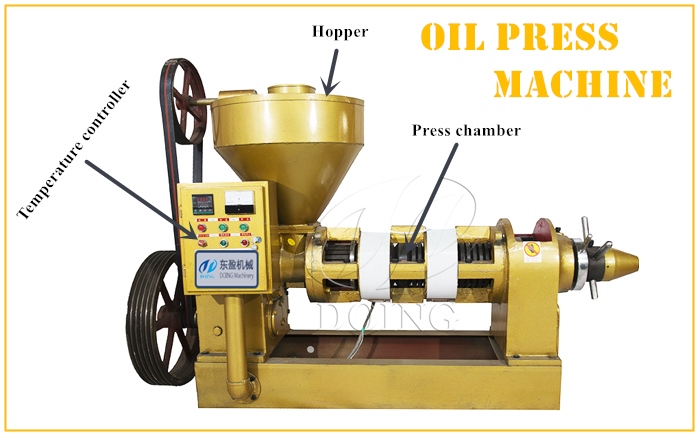 Automatic temperature controlled oil expeller
When evaluating an oil expeller, distinguish three measurements:
Oil content: How much oil the raw material contains.
Oil recovery efficiency: How much of that available oil the process extracts.
Oil yield: How much oil is produced relative to the amount of raw material processed.
These figures are not interchangeable. For a specific plant, the most useful comparison is the expected oil output and residual oil in the cake for your actual raw material and operating conditions.
If maximizing oil recovery is your primary objective, hot pressing is generally the stronger choice for mechanical extraction. If the cake still contains too much oil for your business targets, a second pressing stage or solvent extraction may be worth evaluating, depending on plant scale and economics.
Which Method Produces Better-Quality Oil?
Oil quality is not determined by pressing temperature alone. However, the two methods offer different advantages.
Cold Pressing: Low-Temperature Processing and Natural Flavor
Cold pressing avoids intentional high-temperature seed conditioning, making it attractive for products marketed around low-temperature processing and natural flavor. It can also help retain certain heat-sensitive compounds, depending on the oilseed and processing conditions.
This makes cold pressing a strong option for specialty oils and businesses targeting customers who value these characteristics.
However, cold-pressed oil is not automatically superior in every quality measurement. Raw material freshness, storage, oxidation, filtration, and hygiene all affect the final product. Cold pressing also does not guarantee that the oil can be sold without further treatment; the required processing depends on the product and applicable standards.
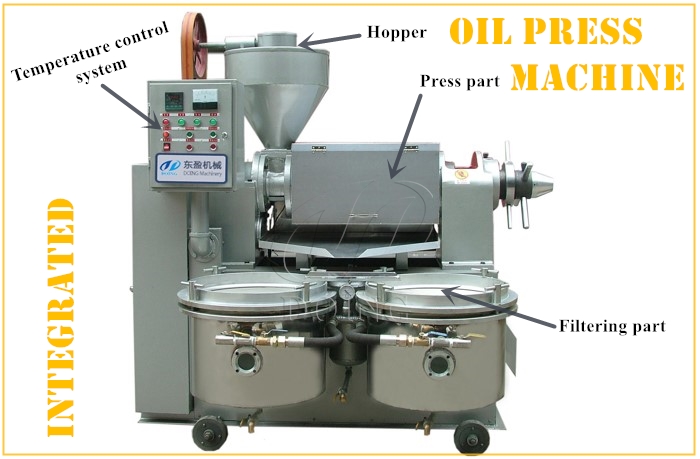 Automatic temperature controlled oil expeller with filter
Hot Pressing: Efficiency for Commercial Oil Production
Hot pressing improves oil release and generally reduces the amount of oil left in the cake. The trade-off is that heating can alter oil color, flavor, and some heat-sensitive components.
For producers making oil for subsequent refining or other industrial applications, these changes may be acceptable within the required product specifications. Crude oil may undergo further processing to meet the intended product quality standard.
The practical distinction is clear: choose cold pressing when low-temperature processing and product positioning are central to your business; choose hot pressing when mechanical oil recovery and production efficiency take priority.
Which Oil Expeller Should You Choose?
The best option depends on what your business needs to achieve.
Choose cold pressing if:
Your target market values low-temperature processing or natural oil flavor.
You are producing specialty oils and can accept lower mechanical oil recovery.
Your product strategy supports the economics of a cold-pressed oil line.
Choose hot pressing if:
Your priority is to recover more oil mechanically from the same raw material.
You plan to operate a commercial production line and need efficient raw material processing.
Your product specifications and downstream processing are compatible with heat-conditioned oilseeds.
Evaluate a combined or multi-stage process if:
Your oilseed has a high oil content and one pressing stage leaves too much oil in the cake.
You need to balance oil recovery, cake value, investment, and production costs.
Your target residual-oil level cannot be achieved economically with a single pressing stage.
Before selecting equipment, compare the raw material's oil content, moisture, required throughput, expected oil recovery, cake value, and final oil specifications. A trial using your actual oilseed is more reliable than choosing a machine based on a generic yield percentage.
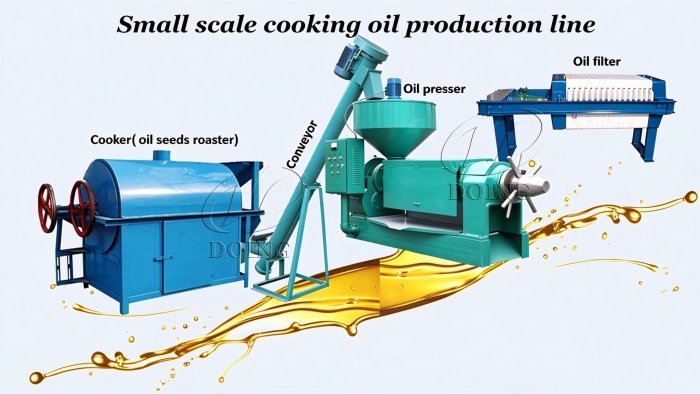 Small scale cooking oil pressing line from Glory Oiltech
A Practical Oil Pressing Example
A real project illustrates how oil pressing equipment can be configured for different oilseeds. In March 2026, Glory Oiltech (Henan Glory) signed an order for a 500 kg/h peanut and sesame oil processing line for a client in Sudan. The planned line includes oilseed cleaning, crushing, roasting, screw pressing, and oil filtration, with an automatic temperature-controlled oil press.
This project demonstrates how seed preparation and pressing equipment can be combined into a practical production line for small-scale edible oil processing.
Read the case: Sudan peanut and sesame oil processing line
Frequently Asked Questions
Can the Same Oil Expeller Be Used for Both Cold Pressing and Hot Pressing?
Not always. Some screw oil presses can handle seeds prepared for different pressing methods, but machine design, temperature control, and operating requirements vary by model. Confirm with the manufacturer whether the selected expeller is suitable for your intended process rather than assuming one machine can perform both methods equally well.
Does Cold Pressing Guarantee That the Oil Temperature Stays Below a Fixed Limit?
No universal temperature limit applies to every product marketed as cold-pressed. Definitions and requirements can differ by oil type, market, and applicable standard. If a specific temperature limit is essential to your product positioning, confirm the applicable standard and ask the supplier how oil temperature is monitored during operation.
Should Oilseeds Be Cleaned Before They Enter an Oil Expeller?
Yes. Removing stones, metal, dust, and other foreign materials helps protect the pressing equipment and supports consistent processing. Additional preparation, such as crushing, moisture adjustment, or heating, depends on the oilseed and the selected pressing method.
What Should Buyers Check When Comparing Oil Expeller Yield Claims?
Ask suppliers to state the oilseed type, raw material moisture, processing rate, oil output, and residual oil content in the press cake. Confirm that the figures use the same measurement basis and comparable operating conditions. Without this information, yield percentages from different machines may not provide a meaningful comparison.
Choose the Right Oil Expeller for Your Production Needs
The right oil expeller depends on your raw material, target oil quality, required oil recovery, and production capacity. Glory Oiltech provides oil pressing equipment and tailored processing line configurations for different oilseeds and production needs.
Contact us today with your oilseed type, target daily capacity, and production goals. Our team can help you evaluate a suitable pressing method, pretreatment requirements, and equipment configuration for your edible oil processing project.
 PREV:Nothing
 NEXT:5 TPD cottonseed oil pressing line: Complete setup from cleaning to filtering for startups
Leave a message
If you wanna to get more details about Cold pressing vs hot pressing oil expeller: Yield & quality differences explained, you can send E-mail to sales@doingoilmachine.com. Or you can consult our professional engineers and specialized sales team by leaving a message in below form. We will contact you ASAP. You also can visit our factory in Henan, China.
- QWhat is your raw material?
- QHow many tons do you want to process per day?
- QWhat machine do you want? or other requirement?

