
- Which corn germ oil extraction method is best for your plant?
- What is a corn germ oil processing line and how does it work?
- Which supplier can provide a turnkey peanut oil processing plant in Africa?
- Sunflower oil processing plant: capacity, process, equipment and project planning guide
- Soybean puffing and pressing process: Complete equipment & flow guide
- Mobile/WhatsApp:
+86 13526627860
- Phone:
+86 13526627860
- Email:
sales@doingoilmachine.com
- Want to process peanuts into oil? Here's how one Nigerian customer did it — 3TPD peanut oil expeller
- Henan Glory secures order from Azerbaijan for 35TPD vertical steam cooker
- Henan Glory to showcase 1tph integrated palm oil pressing Line at PALMEX Thailand 2026
- Palm kernel oil extraction machine: Local pickup completed at Henan Glory Nigeria warehouse
- Nigerian customer collects 500kg/h diesel palm oil mill plant from Henan Glory Nigeria warehouse
Which corn germ oil extraction method is best for your plant?
For most corn germ oil extraction projects, the decision comes down to which extraction method fits: full mechanical pressing, or pre-pressing followed by solvent extraction. There is no default answer — the right one depends on your raw material, your investment plan, and what you actually want from the process.
Glory Oiltech (Henan Glory) builds equipment for both corn germ oil extraction methods — here is how they compare on the details that actually decide a project.
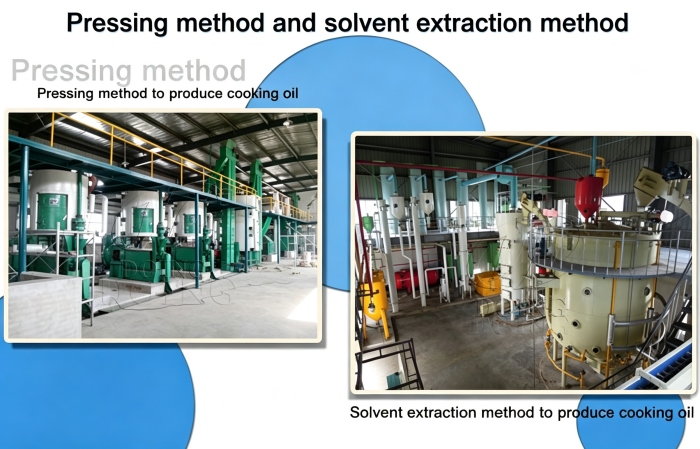 Corn germ oil extraction methods
The Two Extraction Methods at a Glance
| Factor | Full Mechanical Pressing | Pre-Pressing + Solvent Extraction |
| Residual oil in meal | 5–8% | Below 1% |
| Process sections | Cleaning, conditioning, flaking, pressing, filtration | Pretreatment, pre-pressing, solvent extraction, meal desolventizing, drying & cooling |
| Equipment complexity | Lower | Higher |
| Initial investment | Lower | Higher |
| Solvent required | None | Yes (N-hexane) |
| Plant footprint | Smaller | Larger |
| Operating skill | Moderate | Higher — requires solvent safety procedures |
| Coproduct output | Higher-oil press cake | Lower-oil germ meal |
When Full Mechanical Pressing Is the Better Fit
Full mechanical pressing runs corn germ through cleaning, conditioning, flaking, and a screw press to squeeze out the oil. The resulting cake carries 5–8% residual fat. Several factors push a project toward full pressing.
Speed to first production
Fewer systems means shorter construction and commissioning timelines. You skip solvent storage, recovery loops, and meal desolventizing — each of which adds complexity and lead time. If your project has a tight deadline or you want revenue flowing sooner, this is a concrete advantage.
Lower operational risk
No solvent on site means no leaks, vapor recovery failures, or residue management concerns. For plants still building their operational capabilities, or for facilities in regions with stricter safety regulations, this is a real practical consideration.
Lower energy cost per ton
Mechanical pressing draws noticeably less power per ton than solvent extraction, which needs heating, steam, and in some cases vacuum systems. If your electricity or steam prices are high, this difference compounds over time.
Feed-market value in the press cake
This is the point most producers overlook, and it can shift the entire economics. The residual fat in press cake is metabolizable energy — animals use it, and feed buyers pay for it. If your region has livestock producers who want exactly that energy-plus-protein profile, the fat left in the cake after pressing is not a loss. It is part of what makes the product valuable. Before you write it off, ask your local feed buyers what they actually want — their answer may decide the method for you.
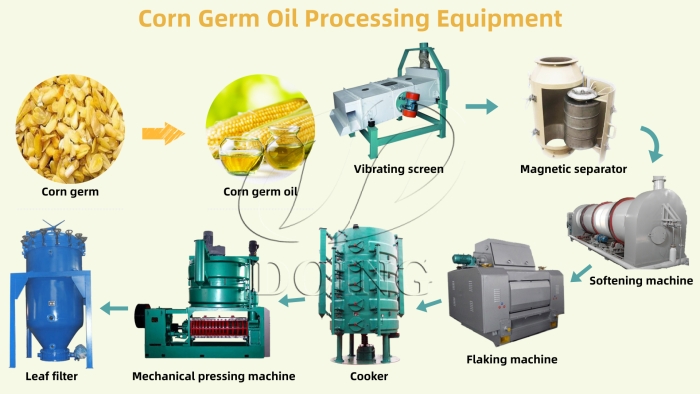 Corn germ oil pressing method
When Pre-Pressing + Solvent Extraction Is the Better Fit
With the pre-pressing plus solvent extraction method, germ goes through pretreatment and pre-pressing first, then the cake passes through a solvent system to pull out the remaining oil. Meal is then desolventized, dried, and cooled. Other factors pull a project toward solvent extraction.
Stable, oil-rich germ supply
Solvent extraction earns its keep when there is enough oil in the germ to justify the extra step. At 40–50% oil content, with a supply that holds steady through the year, the oil a press alone leaves behind becomes a meaningful revenue line. Steady supply also matters for a second reason: the solvent section has to run at the throughput its payback calculation assumes.
Consistent, specification-controlled quality
Solvent extraction gives you precise control over temperature, retention time, and solvent-to-meal ratio — which translates directly into batch-to-batch consistency. For buyers who specify residual oil levels in purchase contracts, this is not a nice-to-have. Miss the spec and you are renegotiating price on every shipment — or losing the account to a supplier who hits it consistently.
Wider buyer base for germ meal
Below 1% residual oil means the meal can be used across a broader range of feed formulations without hitting fat content limits. Poultry, aquaculture, and precision-formulated feeds often require this specification. Food and pharmaceutical intermediate buyers typically will not accept anything else. A wider buyer base gives you more pricing flexibility and reduces your dependence on any single market segment.
More oil into revenue, less into the meal
With a solvent system, the oil a press leaves behind is captured as crude oil rather than staying in the meal. For a project built on oil sales, that shifts which product carries the value. The lower-oil meal that results also has a cleaner, more consistent specification, which simplifies how you manage and sell the coproduct.
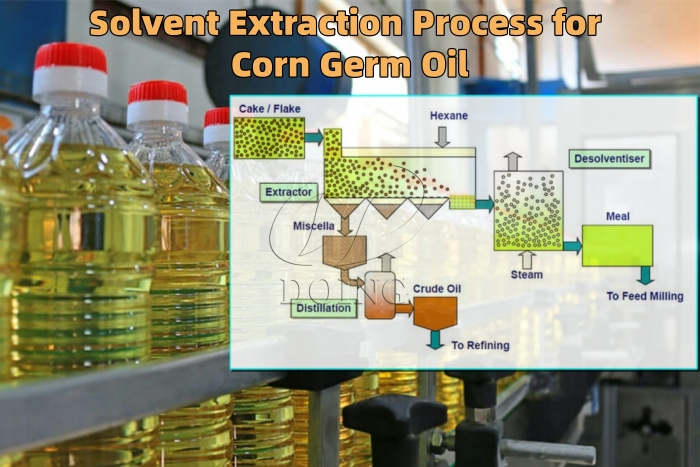 Corn germ oil solvent extraction method
How to Choose the Right Corn Germ Oil Extraction Method
Four things decide it — work through them before you compare equipment.
Start with your germ analysis. A configuration that works for wet-milled germ at 45% oil content will not perform the same on dry-milled germ at 20%. Oil content, and how steady the supply is, sets the whole calculation — get the analysis before you configure anything.
Then talk to your coproduct buyers. Ask them directly whether they value higher residual fat or need low-oil meal. Their answer should carry more weight than any industry table.
Look at what is already on your site. An existing corn processing facility may have steam, power, storage, and material handling in place — that can substantially cut the cost of adding an extraction line.
Finally, think three to five years out. If growth is coming, reserve space and plan utility capacity for a solvent upgrade from day one. It is far cheaper than rebuilding later.
FAQ about Corn Germ Oil Extraction
What regulatory approvals or permits does a corn germ oil extraction plant require?
Full mechanical pressing requires standard vegetable oil processing permits — environmental, wastewater, fire safety. Solvent extraction adds hazardous solvent handling licenses, vapor recovery permits, and additional fire safety certifications. In most jurisdictions, the solvent method takes longer to approve and has a higher documentation burden.
Does the extraction method affect the quality of the crude corn germ oil itself?
No. Both methods produce crude oil that goes through the same refining process afterward. What actually matters commercially is FFA content — it determines how much alkali is needed during neutralization, which is the single biggest refining cost driver. Regardless of which extraction method you choose, control your germ conditioning temperature and pressing moisture to keep FFA as low as possible. That is where the real quality and cost story is.
What are the main cost drivers that push a corn germ oil project over budget?
Pressing lines tend to go over on civil works and site preparation — scope creep, foundation issues. Solvent lines tend to go over on the solvent section itself — fabrication and testing lead times, safety infrastructure, and specialized commissioning support. If cost predictability matters to you, pressing is generally the more controlled build.
How do I evaluate whether my corn germ supply is large enough to justify the investment?
Work the math: daily extra oil recovered × crude oil price = daily revenue from solvent extraction. Divide your estimated incremental capital cost for the solvent section by that daily revenue. Before you commit to any equipment configuration, get your germ supplier to confirm volume and quality specifications in writing.
Still Not Sure Which Extraction Method Is Right for Your Plant?
If you are at the decision stage right now — whether you are still in early planning or already comparing equipment quotes — contact Glory Oiltech with your project details. Our team will assess your raw material, capacity, and budget, and recommend the most practical extraction method for your plant.


Leave a message
If you wanna to get more details about Which corn germ oil extraction method is best for your plant?, you can send E-mail to sales@doingoilmachine.com. Or you can consult our professional engineers and specialized sales team by leaving a message in below form. We will contact you ASAP. You also can visit our factory in Henan, China.
- QWhat is your raw material?
- QHow many tons do you want to process per day?
- QWhat machine do you want? or other requirement?

