
- Rapeseed oil pressing vs extraction: Which method is right for your business?
- How much power, space and time does a 1 TPD small edible oil refinery really need?
- Which small-scale edible oil extraction and refining plant supplier fits your startup?
- Which corn germ oil extraction method is best for your plant?
- What is a corn germ oil processing line and how does it work?
- Mobile/WhatsApp:
+86 13526627860
- Phone:
+86 13526627860
- Email:
sales@doingoilmachine.com
- Glory Oiltech secures 3 TPH palm kernel oil processing plant order in Nigeria
- Glory Oiltech secures 30 TPD soybean oil processing plant order in Nigeria
- Glory Oiltech (a subsidiary of Doing Holdings) Chairman Zheng Yongye reappointed Vice Chairman of NCCEA
- PALMEX Medan 2026: Meet Glory Oiltech and explore 5 TPH palm oil extraction machine solutions
- Want to process peanuts into oil? Here's how one Nigerian customer did it — 3TPD peanut oil expeller
Rapeseed oil pressing vs extraction: Which method is right for your business?
Choosing between mechanical pressing and solvent extraction is one of the most critical decisions for any rapeseed oil processor. The answer to the rapeseed pressing vs extraction debate ultimately depends on three factors: your target production capacity, your desired oil quality positioning, and your available investment budget. While pressing preserves natural flavors and nutrients for premium markets, solvent extraction maximizes yield and minimizes residual oil for large-scale commodity production. This guide provides a comprehensive decision tree and technical comparison to help plant managers and equipment purchasers select the optimal processing route for their specific business needs.
Rapeseed Oil Processing: Two Core Routes
The rapeseed pressing vs extraction comparison centers on two fundamentally different processing philosophies. Mechanical pressing relies solely on physical force to squeeze oil from the seed, making it a straightforward and chemical-free method. Solvent extraction, on the other hand, uses a food-grade solvent to dissolve and separate the oil from the solid cake, achieving near-total oil recovery. Understanding the distinct characteristics of each route is the first step in evaluating rapeseed pressing vs extraction for your facility.
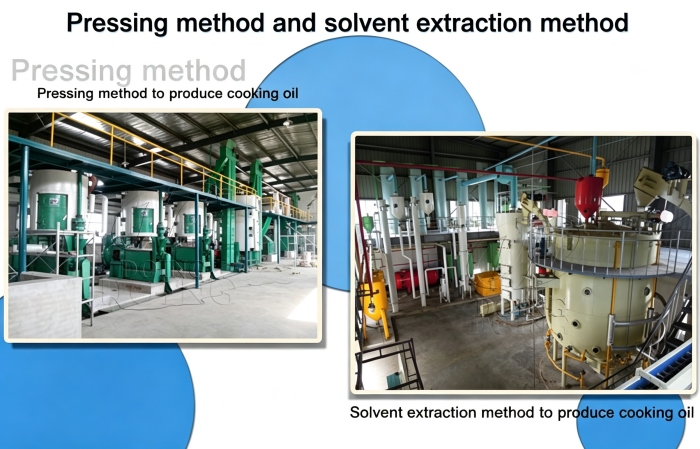 Rapeseed pressing vs extraction method
Pressing Method: How It Works and What You Get
Mechanical pressing is divided into two primary sub-categories: cold pressing and hot pressing. In cold pressing, rapeseeds are cleaned, flaked, and pressed at temperatures below 60°C. This gentle approach retains over 90% of natural antioxidants and heat-sensitive nutrients, producing a premium, lightly colored oil with a mild flavor. However, cold pressing typically achieves an oil yield of 80-85%, leaving a higher residual oil content in the cake.
Hot pressing involves roasting or cooking the seeds before pressing, which ruptures cell structures more effectively and increases the oil yield to 85-90%. The resulting oil has a richer color and stronger aroma, aligning with traditional consumer preferences in many Asian markets. The trade-off is that hot pressing degrades over 30% of heat-sensitive nutrients. Both pressing methods produce rapeseed cake with a residual oil content of 7-12%, which still holds significant nutritional value as animal feed.
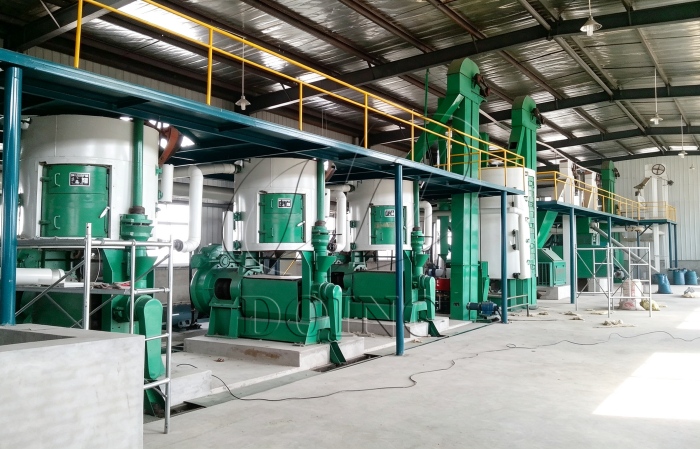 Rapeseed oil pressing plant
Solvent Extraction: How It Works and What You Get
Solvent extraction is designed for maximum efficiency and is typically deployed as a pre-pressing solvent extraction system for rapeseed. In this hybrid approach, seeds are first mechanically pressed to remove the bulk of the oil, reducing the cake's oil content to 12-18%. The pre-pressed cake is then fed into an extractor where a food-grade solvent (such as hexane) dissolves the remaining oil.
The miscella (oil-solvent mixture) is separated, and the solvent is recovered through distillation and recycled in a fully closed-loop system. This process reduces the residual oil in the final meal to below 1%, pushing the total oil recovery rate to 95-98%. The resulting crude oil requires further refining, while the defatted rapeseed meal is an excellent high-protein feed ingredient. Modern solvent extraction plants employ rigorous safety and environmental controls, ensuring that residual solvent levels in both the oil and meal are far below national and international safety standards.
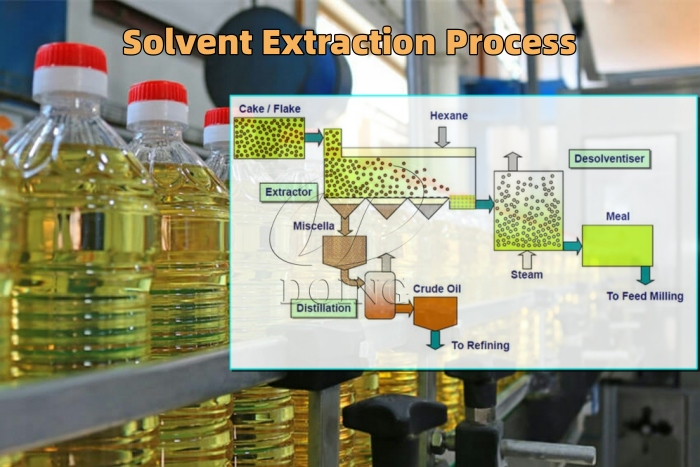 Rapeseed oil solvent extraction process
Side-by-Side Comparison: Rapeseed Pressing vs Extraction
The following table summarizes the key operational and economic differences in the rapeseed pressing vs extraction evaluation:
| Parameter | Mechanical Pressing | Solvent Extraction |
| Oil Yield | 80-90% | 95-98% |
| Residual Oil in Meal | 7-12% | <1% |
| Investment Threshold | 30,000-200,000 | 300,000-1,000,000+ |
| Suitable Capacity | 5-100 TPD | 100+ TPD |
| Oil Quality Positioning | Premium, natural, nutrient-rich | Commodity, refined, neutral |
| Meal Value | High-residual oil cake | High-protein defatted meal |
| Energy Consumption | Lower | Higher (solvent recovery) |
| Target Market | Health-conscious, traditional | Bulk edible oil, animal feed |
Decision Tree: Which Method Is Right for You?
Navigating the rapeseed pressing vs extraction choice becomes straightforward when you follow this three-step decision framework:
Step 1: Evaluate Your Production Capacity
If your planned capacity is below 100 TPD, mechanical pressing is generally the most economically viable option.
If your capacity exceeds 100 TPD, solvent extraction (or a pre-pressing solvent extraction system) should be seriously considered to maximize yield and justify the higher capital expenditure.
Step 2: Define Your Oil Quality Positioning
If you are targeting the premium, health-conscious, or traditional market where natural flavor and nutrient retention command higher prices, choose pressing (cold or hot).
If you are producing refined, neutral-tasting oil for the mass market or industrial applications, solvent extraction is the superior choice.
Step 3: Assess Your Investment Budget
If your capital budget is under $200,000, focus on mechanical pressing solutions.
If you have access to $300,000 or more and can support the operational complexity of solvent recovery, extraction offers better long-term returns at scale.
When in doubt, consulting with experienced equipment providers like Glory Oiltech (Henan Glory) can help validate your assumptions against real-world project data.
Real-World Cases
Glory Oiltech delivered a 5 TPD turnkey rapeseed oil processing line in Yunnan, China, for an agriculture-sector client who, after comparing several suppliers, selected the company for the quality, price and process design of its rapeseed equipment. The client wanted to process rapeseed and sell the finished oil directly, so the project covered the full chain - seed preprocessing, screw pressing, refining and bottling - in one integrated line. The equipment shipped in June 2023 and was installed in under two weeks, reaching trial production on 23 July 2023, with the client satisfied by both the oil quality and the line's stable operation. This case shows that pressing with downstream refining is a proven route for regional premium markets that value flavorful, traditionally processed rapeseed oil.
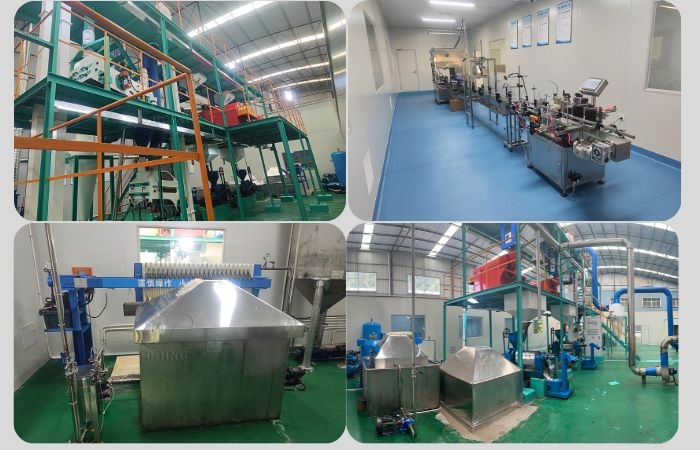 5 TPD turnkey rapeseed oil processing line project
For the high-capacity, maximum-recovery side of the rapeseed pressing vs extraction comparison, Glory Oiltech engineered a combined pressing-and-solvent-extraction plant for a palm kernel oil processor in Ondo State, Nigeria (same pressing-plus-extraction process, applied cross-oilseed to palm kernel rather than rapeseed). Working within a limited budget, the client - who had been planning the business since 2015 - visited the Glory Oiltech factory in March 2016 and ordered a 60 TPD palm kernel pressing line paired with a 40 TPD solvent extraction line, organized into two workshops: kernel preprocessing and pressing, and kernel-oil solvent extraction. Installed and commissioned in July 2017, the press-then-extract configuration maximizes oil recovery for mid-to-large investors, mirroring exactly the pre-pressing solvent extraction logic that large-scale rapeseed operations rely on to push residual oil below 1%.
When to Consider a Hybrid Approach
The rapeseed pressing vs extraction dichotomy is not always absolute. A pre-pressing solvent extraction system combines the advantages of both methods and is often the optimal solution for mid-to-large-scale processors (100-500 TPD). By mechanically pressing first, you reduce the solvent extraction load, lower energy consumption, and produce a higher-value press cake for partial sale or specialized feed markets. The subsequent extraction step then recovers the remaining oil efficiently. This hybrid approach is particularly attractive when market conditions favor both premium cake sales and bulk oil production.
Frequently Asked Questions
How do I calculate the true economic difference between pressing yield and extraction residual oil rates?
Do not compare pressing yield (85-90%) directly with extraction residual oil (<1%). Instead, calculate the total recoverable oil value: pressing yields 85-90% oil plus a cake with 7-12% residual oil that has feed value, while extraction yields 95-98% oil plus a meal with <1% residual oil. The economic gap narrows significantly when you assign market value to the byproduct. Always model your business case using total revenue from both oil and meal/cake, not just oil yield alone.
What are the legal limits for solvent residue in different markets?
Regulations vary significantly by region. In China, GB 2716-2018 sets the solvent residue limit for solvent-extracted edible oils at ≤20 mg/kg, while pressed oils must show "not detected" (residue<10 mg/kg is considered non-detectable). The EU currently enforces a statutory limit of ≤1 mg/kg for hexane residue in edible oils, with EFSA having launched a re-evaluation of technical hexane safety in May 2025 that may lead to tighter standards. The US FDA classifies hexane as a GRAS processing aid and requires use under GMP principles (residues "as low as reasonably achievable") without specifying a numerical ppm limit. For emerging markets, India's FSSAI caps refined solvent-extracted oil at ≤5.0 mg/kg, with pressed oils required to be hexane-free. Glory Oiltech's solvent recovery systems are designed to meet the strictest applicable standard for your target market.
At what capacity threshold does upgrading from pressing to extraction become financially justified?
The typical break-even point for upgrading from pure pressing to pre-pressing solvent extraction is around 100-150 TPD, assuming stable raw material supply and access to refined oil markets. Below this threshold, the fixed costs of solvent recovery infrastructure cannot be amortized efficiently. However, if your pressing operation is already running at 80+ TPD with strong margins and growing demand, initiating a feasibility study for phased expansion is advisable. The transition is most economical when planned during scheduled maintenance or expansion cycles.
How does the protein content difference between press cake and extracted meal affect feed pricing?
Press cake (7-12% residual oil) typically contains 32-36% crude protein but has higher fiber and lower metabolizable energy due to residual oil oxidation risks. Extracted rapeseed meal (<1% residual oil) consistently delivers 36-40% crude protein with more stable nutritional profiles, commanding a 5-15% price premium in commercial feed markets. The higher protein concentration and reduced oil content make extracted meal more suitable for poultry and aquaculture formulations, while press cake is often directed to ruminant feed. Factor this price differential into your rapeseed pressing vs extraction economic model.
Can I convert an existing pressing line to pre-pressing solvent extraction without shutting down production?
Yes, phased retrofitting is possible. The typical approach is to first install a pre-pressing station parallel to your existing pressing line, allowing continued operation during construction. Once the pre-pressing station is commissioned, your existing presses can be repurposed as the pre-pressing stage, and the extraction plant is built adjacent to it. This strategy minimizes downtime to 2-4 weeks for final integration and commissioning. Detailed engineering planning with your equipment supplier is essential to sequence the conversion without disrupting ongoing production or cash flow.
Make the Right Choice for Your Rapeseed Oil Business
The rapeseed pressing vs extraction decision shapes your facility's profitability, product portfolio, and growth trajectory for years to come. Whether you need a compact cold pressing line for premium oil, a robust hot pressing system for traditional markets, or a high-efficiency pre-pressing solvent extraction plant for large-scale production, the right equipment partner makes all the difference. Contact Glory Oiltech today to discuss your specific capacity, budget, and market goals, and receive a customized process recommendation backed by real project experience.
 PREV:Nothing
 NEXT:How much power, space and time does a 1 TPD small edible oil refinery really need?
Leave a message
If you wanna to get more details about Rapeseed oil pressing vs extraction: Which method is right for your business?, you can send E-mail to sales@doingoilmachine.com. Or you can consult our professional engineers and specialized sales team by leaving a message in below form. We will contact you ASAP. You also can visit our factory in Henan, China.
- QWhat is your raw material?
- QHow many tons do you want to process per day?
- QWhat machine do you want? or other requirement?

